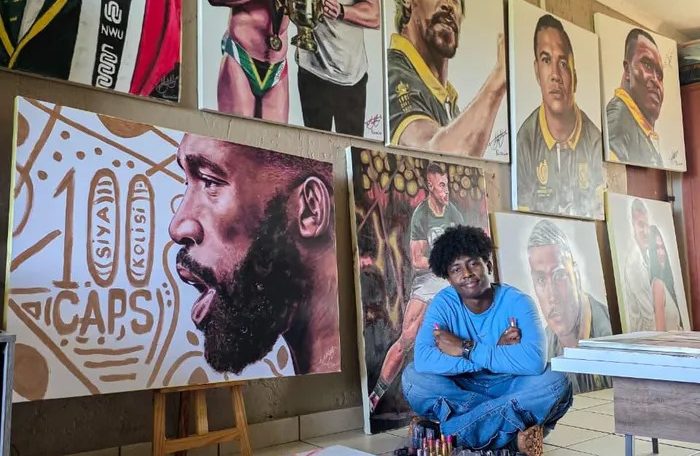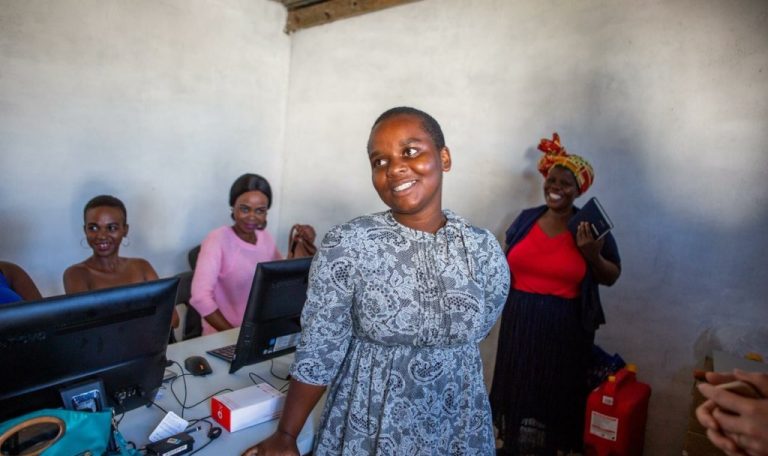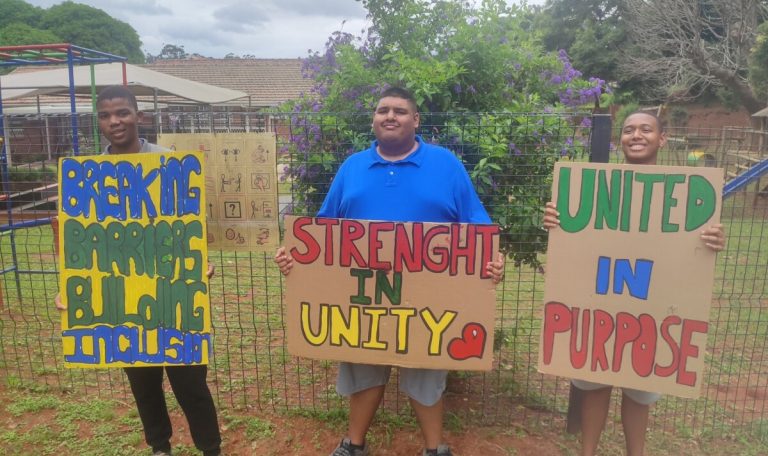
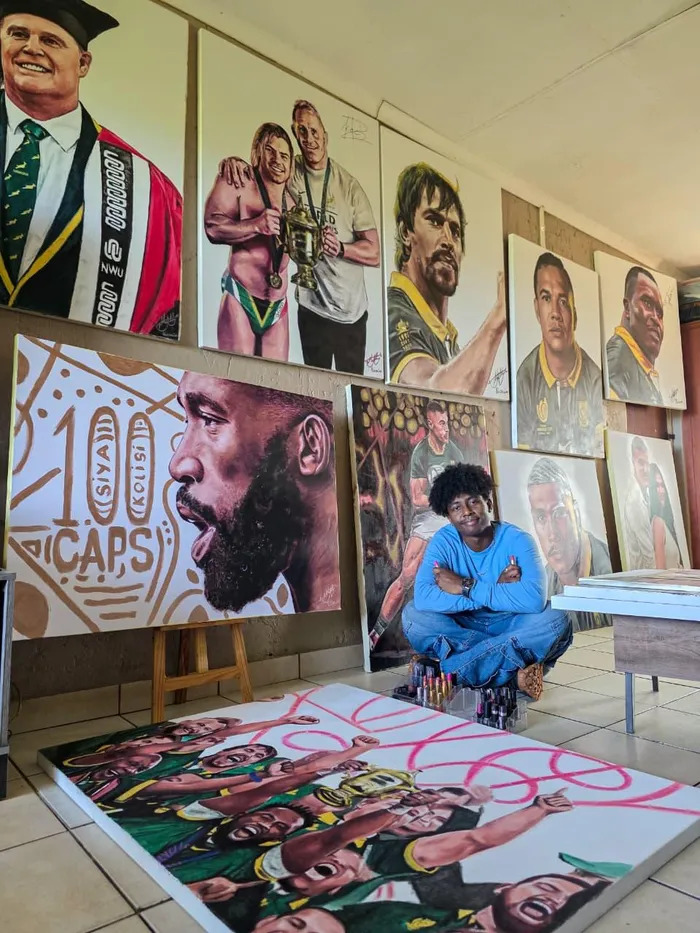

When Ricollin Moodley’s mother underwent a life-saving leg amputation, the self-taught artist from Shelly Beach on the KwaZulu-Natal South Coast turned to his creativity to support his family, using unconventional materials like lipstick, spices and coffee to create art.
What began as a desperate response to poverty has grown into the family’s main source of income. As they face rising medical costs and the urgent need for disability-friendly housing, Moodley’s work has become a vital lifeline.
His distinctive art style has gained attention both online and within local communities, helping to ease the financial strain of his mother’s hospital expenses and the challenges that followed her surgery.
“I am a self-taught visual artist, and at the moment, my art is not just my passion but also my family’s main source of support,” said Moodley.
Originally from Ladysmith, Moodley describes a childhood shaped by instability and financial hardship.
“We did not have a place of our own. We kept moving, trying to find somewhere we could survive. My childhood was shaped by scarcity, but also by resilience,” he said.
Art became part of his life during one of his family’s most difficult periods. In 2017, while in Grade 11 at just 16 years old, his family faced extreme hardship — with no food, a seriously ill mother and limited income from his father.
“I was trying to think of what I could do with my hands to help. The only thing that came to mind was drawing, even though I had no experience and had never taken art at school.”
He began sketching at a local beach, where he connected with his first customer, a turning point that changed everything.
Without access to traditional art supplies, Moodley improvised with whatever he could find.
“I chose to work with materials like lipstick, spices, or tea instead of traditional paints because I didn’t have access to proper supplies. I searched through bins and found discarded items—lipsticks, used coffee grounds, and thrown-away spices.
“That was when I realised I could paint with anything. That moment changed how I saw art forever. It taught me that it’s not about the tools—it’s about creating, no matter what,” he said.
Over time, these unconventional materials became central to his artistic identity, each piece reflecting deeper meaning.
“They carry stories of survival, poverty, and resilience,” he explained.
As his mother’s health worsened due to diabetes-related complications, the situation became even more urgent. A severe infection ultimately led to the amputation of her leg.
“This has completely changed our daily lives. She can no longer manage in the home we’re renting, as it is upstairs and not disability-friendly.”
With limited income and declining art sales, Moodley has turned to crowdfunding, launching a BackaBuddy campaign to help cover medical costs and secure accessible housing.
“We do not have the finances to take care of my mum after she returns from hospital. We need to find a disability-friendly place to rent and be able to afford her medical supplies and other essentials.
“Even before my mum got sick, we always struggled financially. My parents worked hard for very little. We were constantly forced to choose between basic needs, often going without.”
Despite the ongoing challenges, Moodley remains hopeful and committed to his craft. He continues to sell his work, take on commissions and collaborate with brands that appreciate his unique approach.
“Staying positive and creating unique art keeps me motivated. I know that one day my art will change my family’s life,” he said.
His story and creative process have resonated widely with the public.
“People love the idea of painting with lipstick, curry, juice, sand, and coffee. But the most important part is my story. It helps people understand where I come from and why I do what I do.”
At the heart of his efforts is a simple but powerful goal: to ensure his mother’s comfort and dignity.
“I hope my mum can live in a safe environment where she can adjust to this life-changing amputation without worrying about how we will afford food or meet her needs. I want her to feel supported.”
This article was originally published by the Cape Times.